5winS.com.br
auruhana2.kz
aviator-bet.co.ke
aviator-game.com.gh
big-bass.co.uk
bsl.community
costacoffee.kz
pin-ups.com.mx
verde-casino.ro

Commercial Real Estate at a Crossroads

Empty office buildings. Reduced store hours. Unbelievably low hotel room rates. All are signs of the times. The containment measures put in place last year in response to the pandemic shuttered businesses and offices, and dealt a severe blow to the demand for commercial real estate—especially, in the retail, hotel, and office segments.

Beyond its immediate impact, the pandemic has also clouded the outlook for commercial real estate, given the advent of trends such as the decline in demand for traditional brick-and-mortar retail in favor of e-commerce, or for offices as work-from-home policies gain traction. Recent IMF analysis finds these trends could disrupt the market for commercial real estate and potentially threaten financial stability.
A Beginner’s Guide to CBN’s Ways and Means to the Federal Government of Nigeria

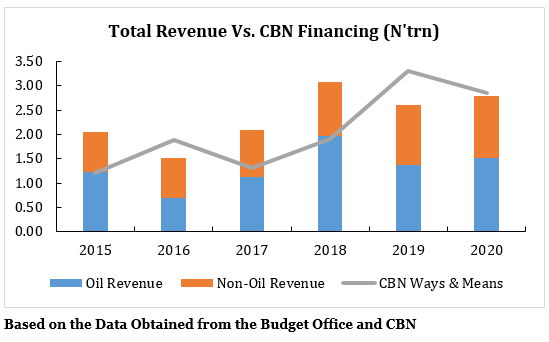
CBN’s financing of the FGN deficits seems to be a structural one and not a one-off event. This is because historical data has shown that the CBN has been financing a huge part of the FGN deficits even when there was no economic downturn. For example, out of the total fiscal deficit of N3.64 trillion in 2018, the CBN financed 52.2%. In 2019, the total fiscal deficit was N4.23 trillion and the CBN financed 78.3% or N3.31 trillion of that amount. There was no downturn during those periods, hence it goes against economic theory for the CBN to be printing money to finance significant proportions of the FGN’s fiscal deficit.

Financial Performance of Dangote Cement Plc in the First 9 Months of 2020

In the first 9 months of 2020, Dangote Cement (DANGCEM) plc was able to grow its revenue by 12% on the basis of solid production volume (+5.6% y/y to 18.40 million tonnes) with an overall effect on sales volume (+6.6% y/y to 19.21 million tonnes).

The Economics of Big Brother Naija (BBN)

A huge part of the revenue from SMS goes to the telecoms operators. Specifically, MTN rakes in 70% of the revenue, Glo rakes in 80% while Airtel rakes in 75%. Withholding tax of 10% is also charged and the value-added service provider (the shortcode- 32052) receives 5%. By taking the average, we estimate that Multichoice only receives 15% of the SMS revenue.

Hence, It is not as rosy as you might have been thinking especially when it comes to revenue from the SMS voting platform. Multichoice gets more revenue from sponsorships than from the voting platforms.

[Archive] From Recession to Growth: The Story Of Nigeria’s Recovery from the 2016 Economic Recession

Being a Paper presented by Godwin I. Emefiele, Governor, Central Bank of Nigeria at the Special Convocation of the University of Nigeria, Nsukka, on Friday, May 17, 2019 at the Princess Alexandra Auditorium, University of Nigeria, Nsukka, Enugu State

2021-2023 MTEF: Key Implications and Market Impact

We recently received the 2021-2023 Medium Term Expenditure Framework (MTEF) and Fiscal Strategy Paper (FSP) released by the budget office of the Federation. We have thus provided an update on the key highlights, their implications and market impacts.

[INFOGRAPHICS] H1’20 Top and Bottom Line of Cement Companies in Nigeria

Nigerian cement companies recorded aggregate growth in their revenues and net income for the half year ended Jun’2020. From our analysis, we highlight that cement volumes actually declined for the companies during the period compared to H1’19 and this is as a result of the social distancing lockdown measures (particularly in April) initiated to combat […]

Corruption and COVID-19

Corruption, the abuse of public office for private gain, is about more than wasted money: it erodes the social contract and corrodes the government’s ability to help grow the economy in a way that benefits all citizens. ut the COVID-19 pandemic has heightened the importance of stronger governance for three reasons.

[INFOGRAPHICS] 7-Year Comparison of Operating Profits of Brewers in Nigeria

The brewing companies in Nigeria have had their operating profits decline over the years and Nigerian Breweries still appears to be the most efficient of the three major brewers in the country with EBITDA at the end of 2019 standing at 20.72%.

COVID-19 is Reducing Domestic Remittances in Africa: What does it Mean for Poor Households?

The amount remitted by migrants from Sub-Saharan Africa (SSA) has grown tenfold in two decades, from $4.8 billion in 2000 to $48 billion in 2018. This reflects a steady increase in the number of people who decided to move in search of a better life: from 21.6 million in 2000, the number of migrants from Africa grew to 36.3 million in 2017.

Scroll to top