The COVID-19 Gender Gap
The COVID-19 pandemic threatens to roll back gains in women’s economic opportunities, widening gender gaps that persist despite 30 years of progress.

Research and Analytics
Research and Analytics
The COVID-19 pandemic threatens to roll back gains in women’s economic opportunities, widening gender gaps that persist despite 30 years of progress.
OPEC+ compliance rose sharply in June, helping to tighten up the market. The improved compliance also boosted confidence and cohesion in the group’s collective effort ahead of a possible loosening of the supply curtailments. Perhaps counterintuitively, that increases the odds that the group increases production beginning in August.
The COVID-19 pandemic is devastating labor markets across the world. Tens of millions of workers lost their jobs, millions more out of the labor force altogether, and many occupations face an uncertain future. Social distancing measures threaten jobs requiring physical presence at the workplace or face-to-face interactions. Those unable to work remotely, unless deemed essential, face a significantly higher risk of reductions in hours or pay, temporary furloughs, or permanent layoffs. What types of jobs and workers are most at risk? Not surprisingly, the costs have fallen most heavily on those who are least able to bear them: the poor and the young in the lowest-paid jobs.
By Ruchir Agarwal and Signe Krogstrup, IMF Blog / Image Credit: IMF Many central banks reduced policy interest rates to zero during the global financial crisis to boost growth. Ten years later, interest rates remain low in most countries. While the global economy has been recovering, future downturns are inevitable. Severe recessions have historically required 3–6 percentage points cut […]
By Davide Furceri, Prakash Loungani, and Jonathan D. Ostry / Image Credit: IMF The COVID-19 crisis is now widely seen as the greatest economic calamity since the Great Depression. In January, the IMF expected global income to grow 3 percent; it is now forecast to fall 3 percent, much worse than during the Great Recession of 2008-09. […]
Download Quantitative Financial Risk Management by Michael B. Miller.
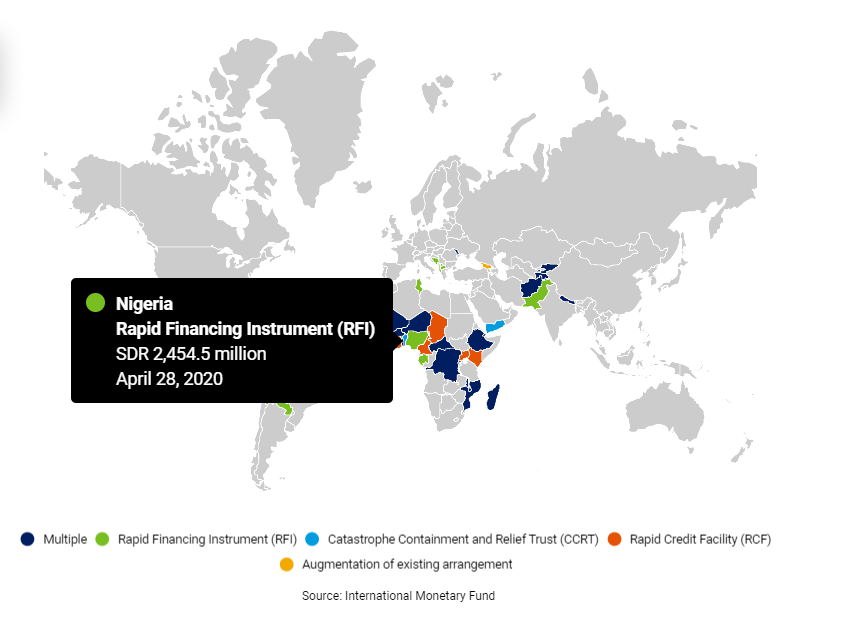
Culled from the International Monetary Fund / Image Credit: IMF Background Nigeria has been severely hit by the spread of COVID-19 and the associated sharp decline in oil prices. Government policy is responding to both these developments. The authorities have reported 3145 cases of COVID-19 and 103 deaths as of May 7, 2020. A range […]
By Vitor Gaspar, Paulo Medas, and John Ralyea/ Image Credit: WEF The pandemic has highlighted the role of the public sector in saving lives and livelihoods. State-owned enterprises are part of that effort. They can be public utilities that provide essential services. Or public banks that provide loans to small businesses. But some are also […]
By Professor Chukwuma Charles Soludo/ Image Credit: WeeTracker This year 2020 begins a new decade that promises to be one of dreadful disruptions, with Africa holding the weakest end of the stick. In 2008/09, the global “great recession” was triggered by financial crisis in the US (world’s largest economy). Then, much of Africa was said […]
![[INFOGRAPHICS] How The Oldest Companies on NSE are Growing (5-Year Revenue CAGR)](https://giftedanalysts.com/wp-content/uploads/2020/07/image-6.png)