5winS.com.br
auruhana2.kz
aviator-bet.co.ke
aviator-game.com.gh
big-bass.co.uk
bsl.community
costacoffee.kz
pin-ups.com.mx
verde-casino.ro

Crypto Prices Move More in Sync With Stocks, Posing New Risks

Amid greater adoption, the correlation of crypto assets with traditional holdings like stocks has increased significantly, which limits their perceived risk diversification benefits and raises the risk of contagion across financial markets, according to new IMF research.

Global Crypto Regulation Should be Comprehensive, Consistent, and Coordinated

Crypto assets and associated products and services have grown rapidly in recent years. Furthermore, interlinkages with the regulated financial system are rising. Policymakers struggle to monitor risks from this evolving sector, in which many activities are unregulated. In fact, we think these financial stability risks could soon become systemic in some countries.

Uncertainty Grips Markets as Optimism Wanes

Amid the prolonged and painful pandemic, risks to global financial stability have remained contained—so far. But with economic optimism fading, and with financial vulnerabilities intensifying, this is a time for careful policy calibration. To an unprecedented degree, the world’s central banks, finance ministries, and international financial institutions have asserted—for a year and a half—policy support for economic growth. Now they must craft strategies that safely approach the next stage of monetary and fiscal policy action.

Crypto Boom Poses New Challenges to Financial Stability

As crypto assets take hold, regulators need to step up.

Crypto assets offer a new world of opportunities: Quick and easy payments. Innovative financial services. Inclusive access to previously “unbanked” parts of the world. All are made possible by the crypto ecosystem. But along with the opportunities come challenges and risks.

Why Even The Most Elite Investors Do Dumb Things When Investing

If you’re Jeff Bezos, you’re not going to have some random dude manage your money and hope for the best. You’re not gonna open up a Robinhood account and risk it all on meme stocks like Gamestop. You’re going to hire the type of investor who has a PhD in mathematics and drives a Bugatti; a go-getter who wakes up with a turmeric latte and pores over satellite images of factories in Asia to predict the earnings of some 3D printing company most of us have never heard of. We’re talking about the best of the best in finance.

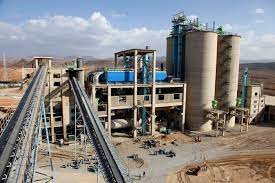
Nigeria’s Cement Industry in 2020: The Boom Amidst the Burst

Dangote cement plc reported a 23% Return on Invested Capital (ROIC), which overshot its nearest competitor (BUA) by 600bps. Lafarge came in a distant third with an ROIC of 6%. We, however, note the gradual increase in Lafarge’s performance over the last five years as it continues to grow its ROIC from the 1% it reported in 2016. We believe this continued uptrend in its performance is hinged on the selloff of its South Africa operations, a strategic action that has continued to impact performance favourably.

Monetary Policy at a Crossroad: Policymakers Need to Break Promise of Easy Money to Avoid Boom-Bust

The Federal Reserve’s new policy approach is that policymakers want to see “actual progress, not forecast progress” before deciding to change its policy stance. Substantial actual progress is occurring in the economy, some faster than others. How much monetary accommodation is needed to meet the ultimate employment and inflation objectives is debatable. But it is less than when the pandemic started and less after the passage of $1.9 trillion in federal stimulus.

Determining when a policy stance has become too accommodative is not an easy matter—but enabling excessive risk-taking to become well-entrenched is comparable to past policy mistakes by allowing a build-up of inflation and inflation expectations. Both are difficult to unwind, and past episodes have shown it is impossible without triggering significant adverse effects in the economy.

Commercial Real Estate at a Crossroads

Empty office buildings. Reduced store hours. Unbelievably low hotel room rates. All are signs of the times. The containment measures put in place last year in response to the pandemic shuttered businesses and offices, and dealt a severe blow to the demand for commercial real estate—especially, in the retail, hotel, and office segments.

Beyond its immediate impact, the pandemic has also clouded the outlook for commercial real estate, given the advent of trends such as the decline in demand for traditional brick-and-mortar retail in favor of e-commerce, or for offices as work-from-home policies gain traction. Recent IMF analysis finds these trends could disrupt the market for commercial real estate and potentially threaten financial stability.

Charting the Path towards Affordable Housing in Nigeria

Each time the word housing pops up, especially the challenges that come with owning /acquiring a house, Affordable Housing or Housing Affordability  follows as it is one of the major, if not the most severally cited, housing problems in the whole wide world. With a housing gap of 17 to 20 million units and a low estimated homeownership rate of 25%, Nigeria is not left behind in this problem. According to a UN report, Nigeria’s population is about 186 million. Over 60% of these people will be living in urban areas in the coming years, hence needing a long-term plan to make housing accessible and affordable in the country. There are too many obstacles and bottlenecks in the housing sector, including the land use act.  In this article, I highlight ways housing can be more accessible irrespective of the sector’s challenges.

Scroll to top